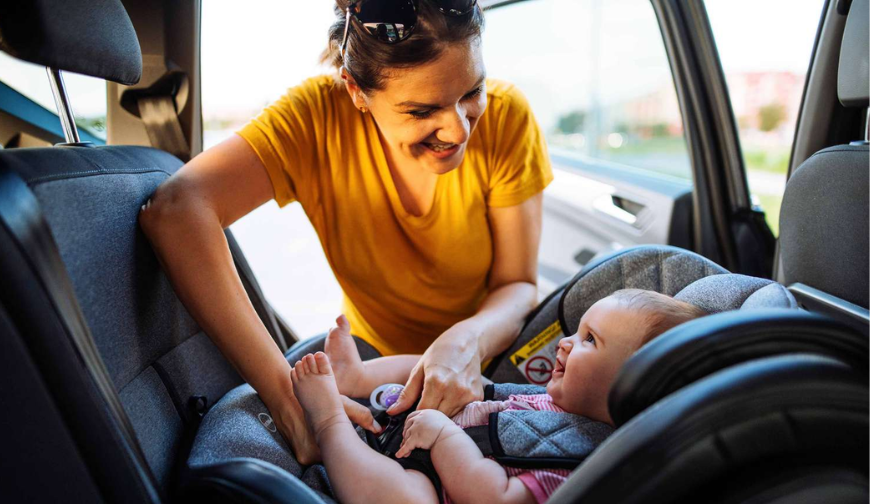
When it comes to protecting your family on the road, choosing from the safest car brands in 2025 is one of the most important decisions you can make. Based on comprehensive crash test ratings from IIHS and NHTSA, advanced safety features, and proven driver assistance systems, we have identified the top 5 safest car brands in 2025. Whether you’re shopping for a family SUV or a reliable sedan, these automakers consistently deliver the highest levels of protection. For complete guidance on keeping your family safe, check out our car seat selection guide.
1. Volvo – The Safety Pioneer
Volvo has been synonymous with automotive safety for decades, and 2025 is no exception. The Swedish automaker continues to lead the industry with groundbreaking innovations like:
- City Safety collision avoidance with automatic emergency braking that detects vehicles, pedestrians, and cyclists
- Run-off Road Protection to prevent injuries during accidents by tightening seat belts and preparing seats
- Blind Spot Information System (BLIS) with steering assistance to prevent lane-change collisions
- Top IIHS Top Safety Pick+ and Euro NCAP ratings across their entire lineup
✅ Why Volvo Leads: Their commitment to “Vision 2020” aimed for zero fatalities in new Volvos—and they’ve nearly achieved it with some of the lowest real-world accident rates.
2. Subaru – All-Wheel Drive Safety Excellence
Subaru’s standard all-wheel drive combined with their award-winning EyeSight® driver assist technology makes them a top choice for families concerned about safety:
- EyeSight® Driver Assist Technology with adaptive cruise control and pre-collision braking
- Symmetrical AWD for superior handling in all weather conditions
- Ring-shaped reinforcement frame for exceptional crash protection and cabin integrity
- IIHS Top Safety Pick awards for multiple 2025 models including Outback, Forester, and Ascent
✅ Why Subaru Excels: The Outback, Forester, and Ascent consistently earn top crash test scores and have some of the lowest fatality rates on the road. Perfect for families who need winter driving safety.
3. Mercedes-Benz – Luxury Meets Safety Innovation
Mercedes-Benz doesn’t just offer luxury—they pioneer safety technology that eventually becomes industry standard across all manufacturers:
- PRE-SAFE® system that prepares the vehicle milliseconds before a collision occurs
- Active Brake Assist with cross-traffic functionality and pedestrian detection
- Attention Assist to detect drowsy driving patterns and alert drivers
- Nine or more airbags in most models, including knee airbags and rear side airbags
✅ Why Mercedes-Benz Innovates: They invented many safety features we take for granted today, including crumple zones, ABS, and airbags. Their 2025 lineup continues this legacy.
4. Honda – Reliability and Protection Combined
Honda vehicles are known for legendary reliability, but they’re also equipped with impressive safety features that protect families:
- Honda Sensing® suite standard on most 2025 models with comprehensive driver assistance
- Collision Mitigation Braking System™ that can prevent or reduce collision severity
- Road Departure Mitigation to keep you safely in your lane
- Advanced Compatibility Engineering™ (ACE™) body structure for optimal crash energy distribution
✅ Why Honda Delivers: The Accord, CR-V, and Pilot all receive top safety ratings while maintaining excellent value and dependability. Remember to also follow proper car seat installation practices in these vehicles.
5. Mazda – Affordable Safety Excellence
Mazda proves you don’t need to spend luxury money to get luxury-level safety features and protection:
- i-ACTIVSENSE® safety suite with radar and camera technology across all models
- Smart Brake Support with pedestrian detection for city and highway driving
- Skyactiv-Body construction for superior crash protection and rigidity
- Multiple IIHS Top Safety Pick+ awards for 2025 models
✅ Why Mazda Stands Out: Models like the CX-5, CX-9, and Mazda3 offer premium safety features at competitive prices, making them excellent value for budget-conscious families.
2025 Safety Ratings Comparison Table
Here’s a quick comparison of the 5 safest car brands in 2025 to help you make an informed decision:
| Brand | IIHS Rating | Key Safety Features | Best Models | Starting Price |
|---|---|---|---|---|
| Volvo | Top Safety Pick+ | City Safety, BLIS, Run-off Protection | XC90, XC60, S90 | $$$$ |
| Subaru | Top Safety Pick | EyeSight, Symmetrical AWD | Outback, Forester, Ascent | $$ |
| Mercedes-Benz | Top Safety Pick+ | PRE-SAFE, Active Brake Assist | E-Class, GLE, S-Class | $$$$ |
| Honda | Top Safety Pick | Honda Sensing, ACE Body | Accord, CR-V, Pilot | $$ |
| Mazda | Top Safety Pick+ | i-ACTIVSENSE, Smart Brake | CX-5, CX-9, Mazda3 | $$ |
Price Guide: $$ = Under $35,000 | $$$ = $35,000-$50,000 | $$$$ = Over $50,000
Keep Your Safe Car Even Safer with Proper Maintenance
Even the safest vehicle on the road can become a hazard if it’s not properly maintained. Regular inspections of your brakes, tires, suspension, and safety systems are essential to keeping your family protected. Just as you would avoid common car seat installation mistakes, maintaining your vehicle’s safety features is crucial for optimal protection.
This is where a workshop manual becomes invaluable. A quality workshop manual provides:
- Detailed maintenance schedules for all safety-critical systems and components
- Step-by-step repair instructions with diagrams and specifications
- Troubleshooting guides to identify potential issues early
- Wiring diagrams for electrical safety systems and sensors
- Torque specifications to ensure components are properly secured
Whether you’re a DIY enthusiast or just want to understand what your mechanic is doing, having access to your vehicle’s official workshop manual helps you make informed decisions about maintenance and repairs.
✅ Recommended Resource: For comprehensive, manufacturer-level workshop manuals for virtually any make and model, visit WorkshopManuals.org. They offer detailed repair manuals that can help you maintain your vehicle’s safety systems to factory specifications.
Frequently Asked Questions About the Safest Car Brands
What makes a car brand safe in 2025?
The safest car brands in 2025 consistently excel in three critical areas: advanced driver assistance systems (ADAS) like automatic emergency braking and blind spot monitoring, superior crash test performance from independent organizations like IIHS and NHTSA, and innovative safety technologies including multi-angle cameras, adaptive cruise control, and reinforced body structures. Brands that prioritize safety invest heavily in research, testing, and real-world data analysis to continually improve their vehicles.
How are car safety ratings determined by IIHS and NHTSA?
The Insurance Institute for Highway Safety (IIHS) and National Highway Traffic Safety Administration (NHTSA) conduct rigorous crash tests to determine safety ratings. IIHS performs six crash tests including small overlap front, moderate overlap front, side impact, roof strength, head restraints, and frontal crash prevention tests. NHTSA uses a 5-star rating system based on frontal crash, side crash, and rollover resistance tests. The safest car brands earn Top Safety Pick+ awards from IIHS and 5-star ratings from NHTSA across their lineups.
Are luxury cars safer than affordable brands?
Not necessarily. While luxury brands like Mercedes-Benz and Volvo pioneered many safety features, affordable brands like Subaru, Honda, and Mazda now offer comparable—and sometimes superior—safety technology at lower price points. The key is choosing models with IIHS Top Safety Pick awards regardless of price. In fact, Subaru and Mazda frequently outperform luxury brands in safety ratings while costing significantly less. Focus on safety ratings and features rather than brand prestige when selecting the safest car for your family.
Which car brand has the best safety record in 2025?
Volvo continues to lead with their Vision 2020 initiative, achieving near-zero fatalities in new vehicles and maintaining the lowest real-world accident injury rates. Subaru follows closely with some of the lowest driver death rates according to IIHS studies, particularly in models like the Outback and Forester. Both brands demonstrate exceptional safety not just in crash tests but in real-world accident data, which is the ultimate measure of safety effectiveness.
What safety features are most important in 2025?
Essential safety features in 2025 include automatic emergency braking (AEB) with pedestrian detection, blind spot monitoring with rear cross-traffic alert, lane keeping assist and lane departure warning, adaptive cruise control with stop-and-go capability, 360-degree camera systems, and advanced airbag systems including side curtain and knee airbags. Modern vehicles should also include forward collision warning, driver attention monitoring, and electronic stability control as standard equipment.
Should I buy a car specifically for child safety?
Absolutely! When you have children, vehicle safety becomes paramount. Look for vehicles from the safest car brands in 2025 that offer LATCH systems for proper car seat installation, rear doors that open wide for easy access, high safety ratings in all crash tests, and advanced safety features like rear cross-traffic alert when backing up. SUVs and minivans often provide better child safety due to higher seating positions and more space for car seats.
Do electric vehicles have the same safety ratings as gas vehicles?
Yes, and in many cases electric vehicles (EVs) perform even better in crash tests due to their lower center of gravity (from battery placement) and lack of a heavy engine block that can intrude into the cabin during frontal crashes. Brands like Tesla, Volvo (with their EV lineup), and other manufacturers producing EVs maintain the same rigorous safety standards. The safest car brands in 2025 are increasingly offering electric options with excellent safety ratings.
How often should I check my vehicle’s safety features?
You should have your vehicle’s safety systems professionally inspected at least once a year or during regular maintenance intervals recommended by the manufacturer. This includes checking that cameras are clean and functioning, sensors are properly calibrated, airbag systems are operational, and all warning lights function correctly. Stay informed about safety technology updates and recall notices for your specific vehicle model.
Can I add safety features to an older car?
While you cannot retrofit advanced integrated safety systems like automatic emergency braking or adaptive cruise control to older vehicles, you can add aftermarket solutions including backup cameras, blind spot monitoring systems, dash cams with collision warnings, and parking sensors. However, these aftermarket additions typically don’t match the performance or integration of factory-installed systems. If safety is a priority, consider upgrading to one of the safest car brands in 2025 with comprehensive built-in safety technology.
What’s the difference between active and passive safety features?
Active safety features work to prevent accidents before they happen—these include automatic emergency braking, lane keeping assist, blind spot monitoring, and traction control. Passive safety features minimize injury once a crash occurs—these include airbags, crumple zones, seat belts, and reinforced cabin structures. The safest car brands in 2025 excel at both active and passive safety, providing comprehensive protection through multiple layers of safety technology and structural design.
Final Safety Tips for Choosing Your Next Vehicle
- Research before you buy: Check IIHS Top Safety Pick awards and NHTSA 5-star ratings for specific models before making a purchase decision
- Test drive safety features: Make sure you understand how advanced safety systems work and that they’re intuitive to use
- Keep up with recalls: Register your vehicle with the manufacturer and respond promptly to safety notices
- Follow maintenance schedules: Use your workshop manual to stay on top of critical service intervals for safety systems
- Practice safe driving: Even the best safety technology can’t replace attentive, defensive driving habits
- Protect your children properly: Learn about the latest car seat safety innovations and understand your state’s car seat laws to ensure compliance
- Consider total safety package: Look beyond just crash test ratings to include driver assistance features, visibility, and ease of use
- Don’t forget winter preparation: If you live in cold climates, review our guide on winter car safety for additional protection
Bottom Line: Choosing one of these top-rated automakers from the safest car brands in 2025 is an excellent start, but remember that safety is a combination of smart vehicle choice, proper maintenance, and responsible driving habits. Invest in your vehicle’s safety systems, understand how they work, and maintain them properly—your family’s safety depends on it. Whether you choose Volvo’s pioneering safety technology, Subaru’s all-wheel-drive excellence, Mercedes-Benz’s luxury innovation, Honda’s reliable protection, or Mazda’s affordable safety features, you’re making a decision that prioritizes what matters most: keeping your loved ones safe on every journey.